Their story
Why do baby elephants live at the Transit Home?
Some baby elephants, called calves, lose their families in the wild. The Transit Home looks after them until they are big and strong. Then they go back to the wild.
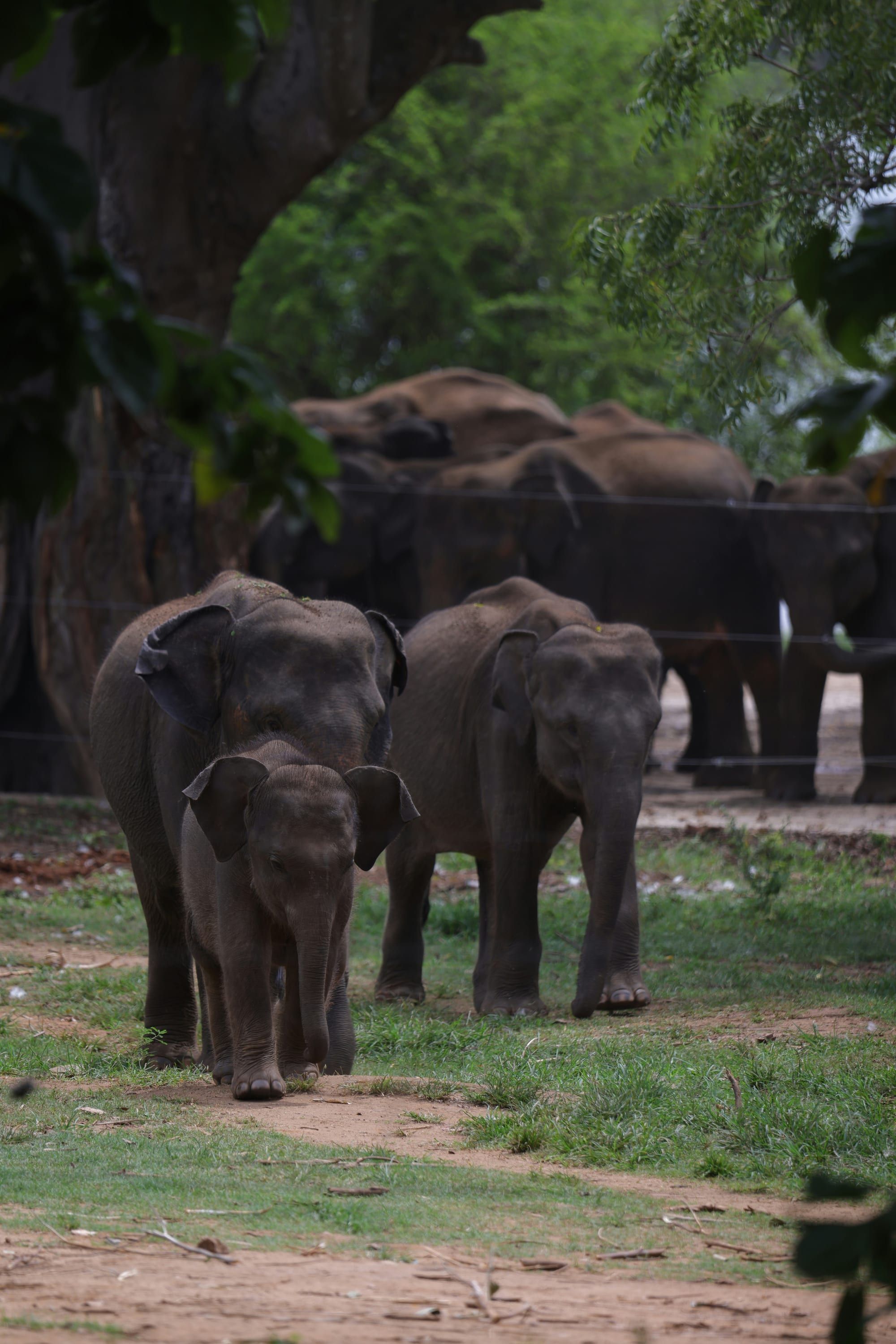
- About 70 calvesAt the Transit Home in early 2026
- More than 190Back in the wild by June 2026
How do calves end up at the Transit Home?
In Sri Lanka, elephants and people often share the same land. Sometimes a baby gets lost when its herd is chased away from farms.
Some babies fall into a well or a deep hole. Some lose their mum. People who look after wild animals find them and bring them to the Transit Home.
About 16 new babies come each year (a 2025 study).

What does “transit” mean? It means a stop on the way. The calves stay for a few years, on their way back to the wild.
A day at the Transit Home
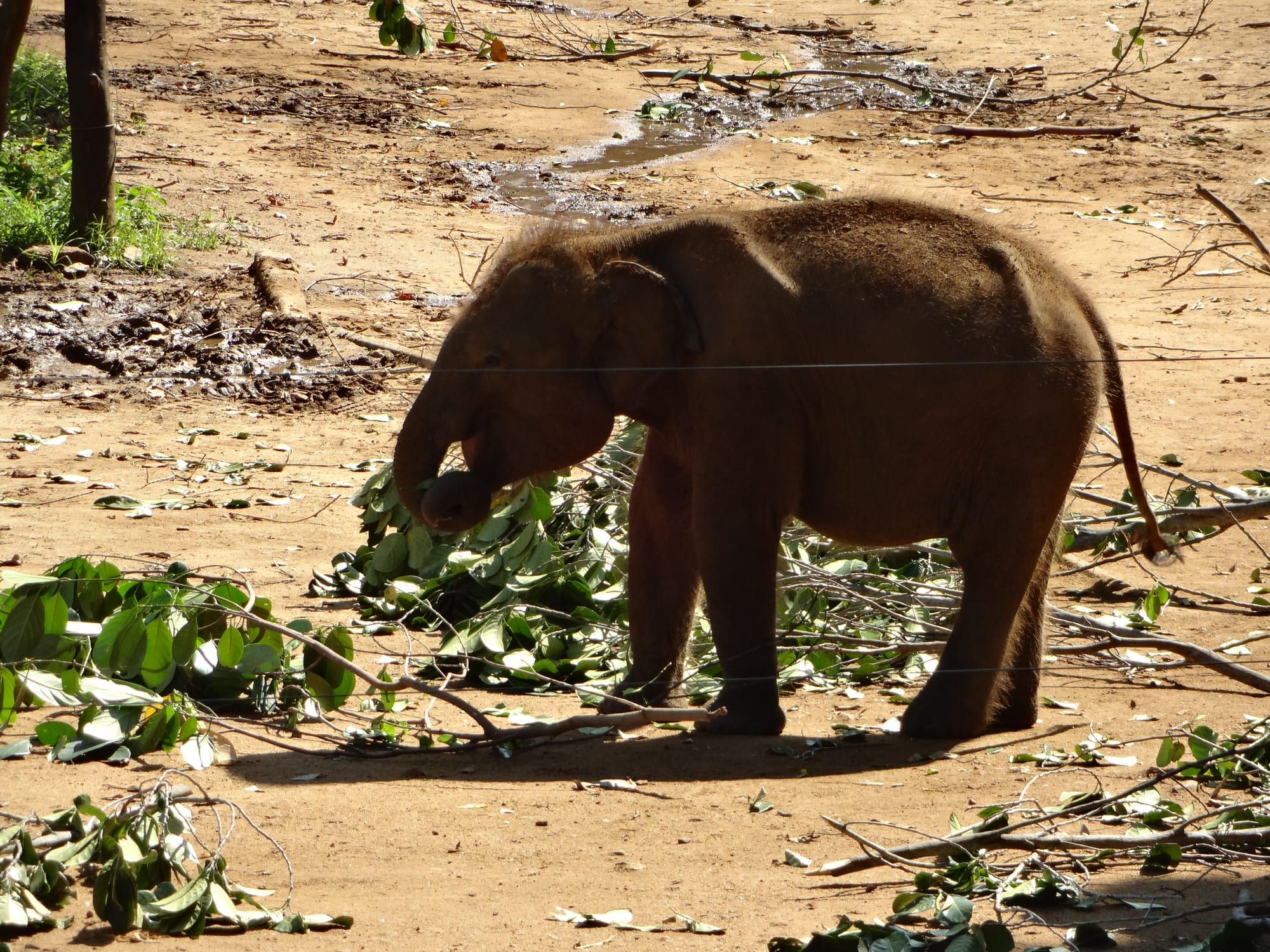
The calves drink milk many times a day, and even at night. Most drink from a big funnel with a tube. The tiniest ones drink from a bottle.
Since 2026, the very youngest get a special elephant milk from Australia. Between feeds, the calves walk, eat leaves, play and roll in the mud.
Vets check on them and help them when they are sick.
Why do visitors only watch?
These calves are going back to the wild. Wild elephants need to stay away from people. So nobody pets them, plays with them or rides them.
Even the keepers only come close to feed them and keep them well. That is why you watch from the stand.
Going back to the wild
-
The first years
Milk and care
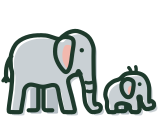
They drink lots of milk and grow strong with their new friends.
-
Growing up
Learning to be wild
They still come for milk. They also eat plants, explore and stay away from people.
-
Age 5 to 7
Back to the wild
They go back to the wild in small groups of friends.
Most go to Udawalawe National Park, next door. Some wear a collar, so the Transit Home's team can follow where they go. More than 190 have gone back to the wild so far (as of June 2026).
Some of the girls raised at the Transit Home have had babies of their own in the wild! So on a safari in Udawalawe, you might see an elephant that grew up at the Transit Home.
The story so far
- 1995The Transit Home opens. The first baby is a girl called Komali.
- 1998The first four young elephants go back to the wild.
- 2024The Elephant Knowledge Walk (a little museum) opens again.
- 2026Special elephant milk arrives for the tiniest babies.
Elephant fun facts
-
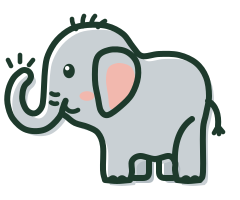
A newborn baby elephant weighs about 110 kg. That is as heavy as a big grown-up man.
-

An elephant mum carries her baby for almost 2 years before it is born.
-
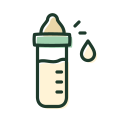
Baby elephants drink their mum’s milk until they are about 2 to 4 years old.
-
A grown-up elephant can eat up to 150 kg of plants in one day.
-
A trunk is full of muscle. A 2023 study counted about 90,000 tiny bundles of muscle.
-
Asian elephants have one little “finger” at the tip of their trunk.
-

Elephants talk with deep rumbles. Some are too low for people to hear.
-

Mud and dust are an elephant’s sun cream and bug spray.
How you can help
- You can give money at the Transit Home for the calves' milk.
- Never feed wild elephants, even the ones that wait by the road. It is against the law, and it puts them in danger.
- If you see a baby elephant alone, don't go near it. Ask a grown-up to call 1992, the number for the people who look after wild animals.